
Malta enacts EU public country-by-country reporting rules for multinationals
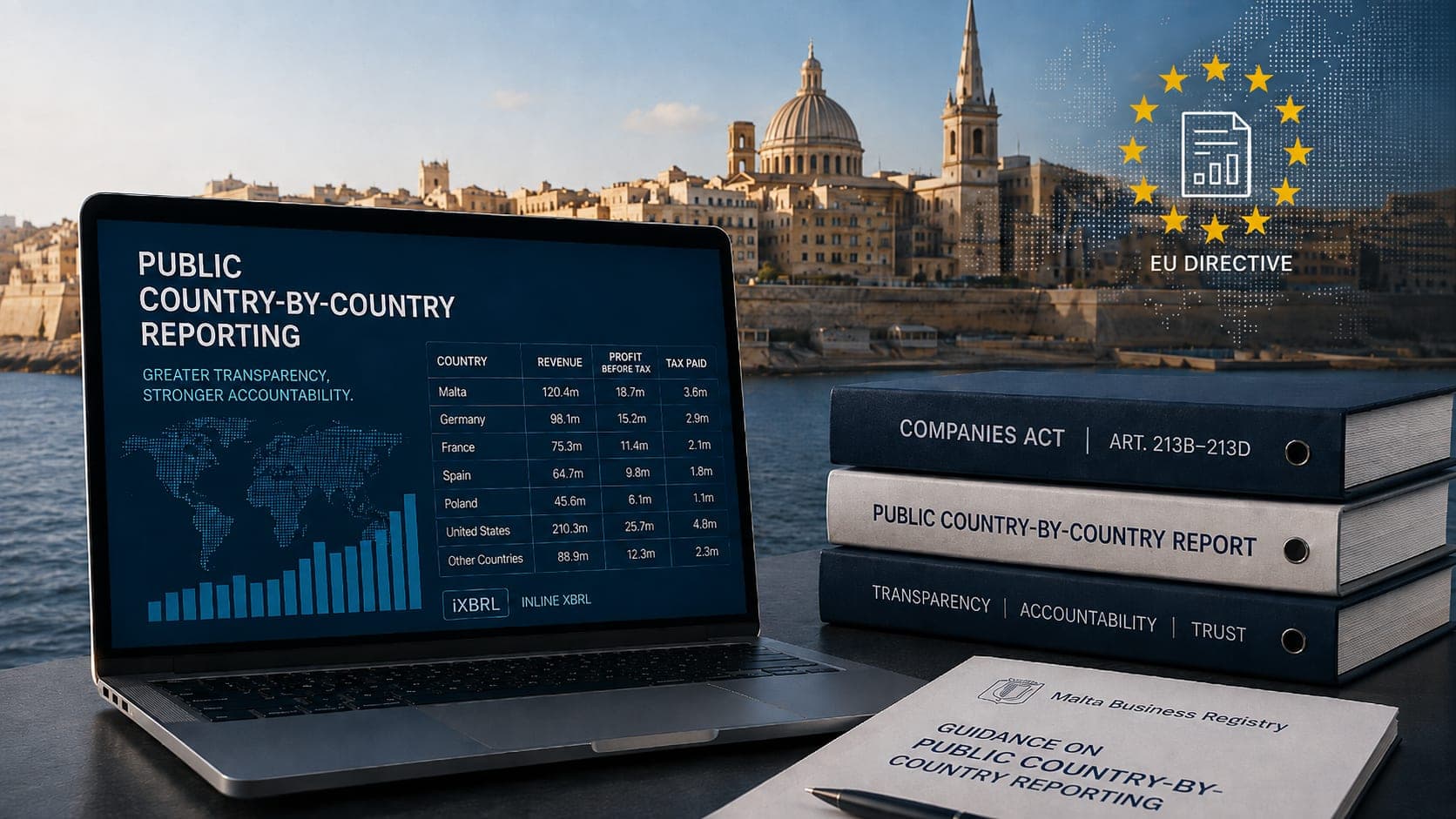
New EU directive on public tax disclosure is now in force in Malta, requiring in-scope entities to file detailed reports from 2025.
Malta has transposed the EU directive on public country-by-country reporting into local law, bringing new transparency obligations for multinational companies operating from the island.
Act XVIII of 2024, which came into effect for accounting periods starting on or after 22 June 2024, introduces Articles 213B, 213C and 213D alongside amendments to the Fourth Schedule of the Companies Act. The move aligns Malta with the bloc's push for greater corporate tax disclosure.
In-scope entities now face a 12-month deadline from their balance sheet date to prepare and publish a Public Country-by-Country Report. For companies with financial years ending in 2025, the first reports will be due in 2026.
The Malta Business Registry will receive these reports electronically, submitted in XHTML format with Inline XBRL tagging. Companies must email their filings to cbcr.mbr@mbr.mt, and they remain solely responsible for the accuracy and timeliness of submissions.
For Malta's business community, this regulation adds a layer of compliance that demands careful planning. Multinationals with significant operations here will need to invest in systems capable of generating iXBRL-tagged data, a technical requirement that may strain smaller groups.
The reporting burden falls on the entity itself, meaning internal controls and audit processes must be robust enough to withstand scrutiny. Non-compliance could trigger penalties and reputational damage in an era where tax transparency is increasingly under the spotlight.
A guidance document published by the Malta Business Registry offers further details on the technical specifications and legal obligations. Companies should review it promptly to ensure their reporting frameworks are ready for the 2026 deadline.
This development marks a shift towards greater public visibility of corporate tax affairs, a trend that is unlikely to reverse. Maltese firms and international groups based here should treat this as a permanent fixture in their regulatory landscape.