
Malta's economy cools but holds steady as tourism booms and property shifts
Central Bank July Update shows moderated growth, strong tourism, mixed property signals, and a drop in inflation to 2.0%.
The Central Bank of Malta's July Economic Update paints a picture of an economy that has dialled back from its recent highs but remains firmly on its historic trend line.
Business activity growth in June stood slightly below the long-term average, according to the Bank's Business Conditions Index. The dip was mainly driven by timing issues in tax revenue rather than a fundamental slowdown.
Manufacturing and retail trade moderated in May, yet in both cases growth still ran above the respective historical averages. Services production slowed in April but also held above its long-term benchmark.
Tourism remains the standout performer. The sector continued to record strong growth in May, sustaining a key revenue stream for the wider economy.
Consumer sentiment jumped markedly in June and is hovering around historic highs. Unemployment expectations have fallen below their historic average, suggesting households remain confident about the labour market.
The property market is sending mixed signals. Approved permits for residential buildings rose in May compared with the same month last year, but commercial permits dropped in June. On the demand side, promise-of-sale agreements fell in June year-on-year, while final deeds of sale increased, pointing to a market that is still transacting but perhaps with fewer new commitments.
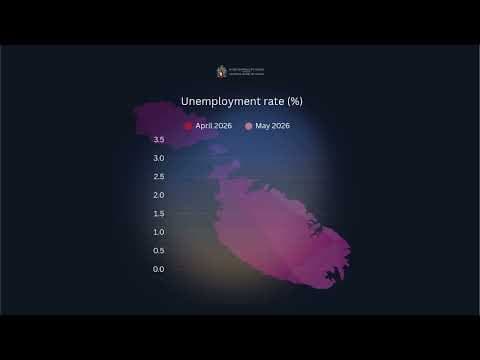
The unemployment rate held at 3.5% in June, unchanged from May but above the rate recorded a year earlier.
Inflation is easing. The annual HICP rate fell from 2.1% in May to 2.0% in June, well below the euro area average where higher energy costs are driving prices. Core inflation excluding food and energy stood at 2.2%, also below the euro area level. The Retail Price Index dropped to 2.5%.
Fiscal news was less encouraging. The Consolidated Fund recorded a deficit in May compared with a surplus a year earlier, hit by the timing of income tax receipts and a surge in capital spending.
Residents' deposits grew at a faster annual rate in May, while annual credit growth remained broadly unchanged from April, suggesting the banking sector is stable but not expanding aggressively.
For Malta's business community, the data signals a soft landing rather than a hard stop. The tourism engine is still firing, consumer confidence is high, and inflation is under control. But the slowing in commercial permits, the uptick in unemployment, and the fiscal deterioration are worth watching in the quarters ahead.