
Central Bank revises up 2026 GDP forecast to 3.8%, inflation easing to 2.2%
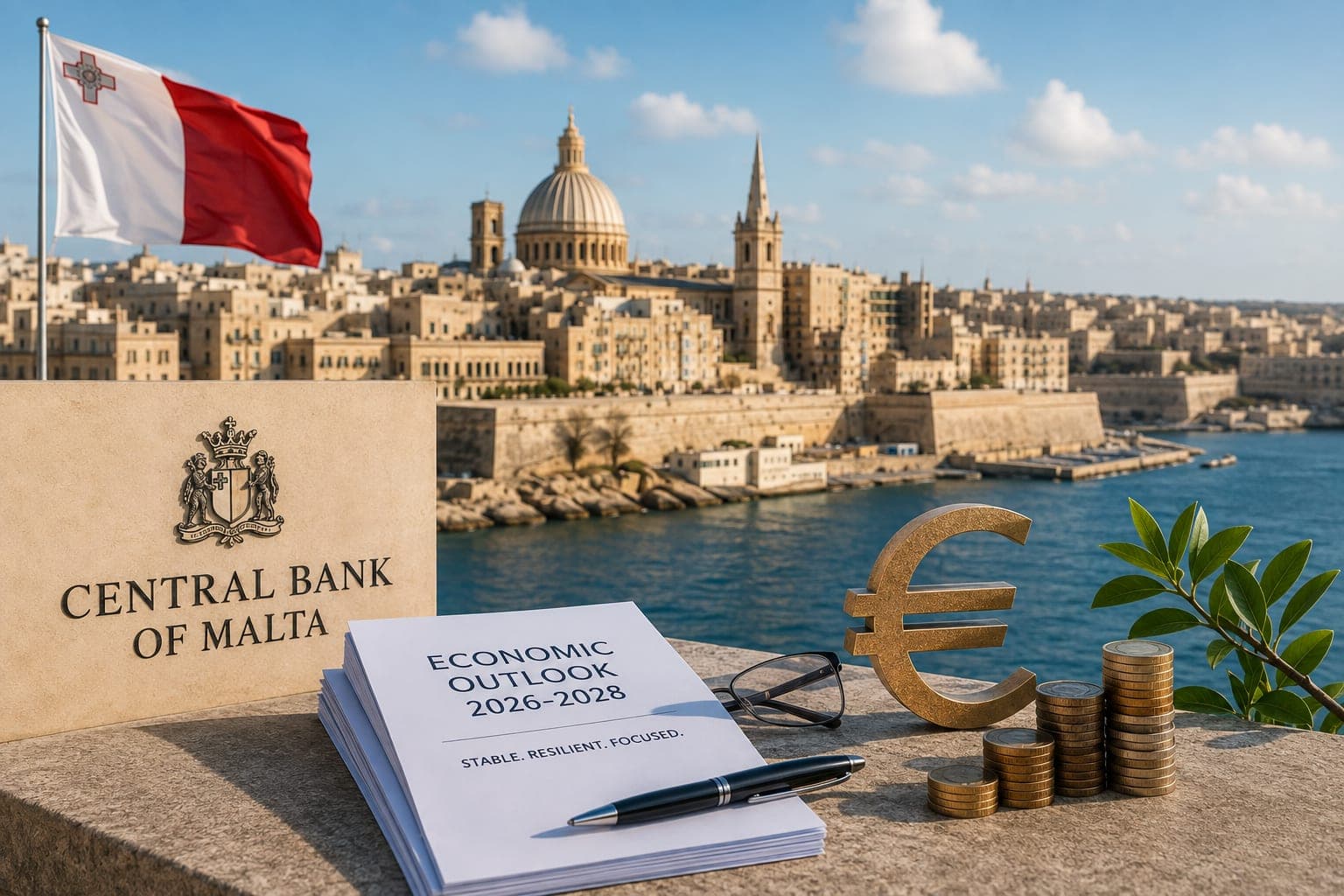
Central Bank of Malta projects 3.8% GDP growth in 2026, led by private consumption, while inflation eases to 2.2%.
The Central Bank of Malta expects economic growth to remain resilient through 2028, with GDP expanding at 3.8% this year, 3.6% in 2027, and 3.8% in 2028.
Private consumption is driving the expansion and is projected to continue at a brisk pace. The 2026 forecast has been revised up by 0.1 percentage points from the Bank's previous projections.
Inflation is cooling. Annual HICP inflation is forecast at 2.2% in 2026, down from 2.4% in 2025, reflecting a recent decline in food prices. The Bank expects a slight uptick in 2027 due to geopolitical tensions and supply disruptions in the Middle East, before inflation eases back to 2.2% in 2028.
The inflation outlook has been revised down by 0.2 percentage points for 2026 and 0.1 points for 2027 compared to the last forecast round.
On the fiscal side, the budget deficit is set to narrow from 2.2% of GDP in 2026 to 1.6% by 2028. The debt-to-GDP ratio is projected to decline from its 2025 peak to 46.1% this year and reach 44.2% by 2028.
For businesses, the risk picture is broadly balanced. Downside risks come from the Middle East conflict and related supply bottlenecks. But private consumption could outperform if employment or wages prove stronger than anticipated.
Inflation risks lean to the upside, driven by potentially higher services inflation and spillover effects from the Middle East conflict. On the fiscal side, the Bank sees deficit-increasing risks tied to potential current expenditure overruns, particularly on energy support measures.
The projections offer a stable macroeconomic backdrop for investment planning, though the energy subsidy bill and geopolitical uncertainty remain key watchpoints for Malta's business community.