
Malta’s shipping register faces high-stakes choice as IMO climate deadline looms
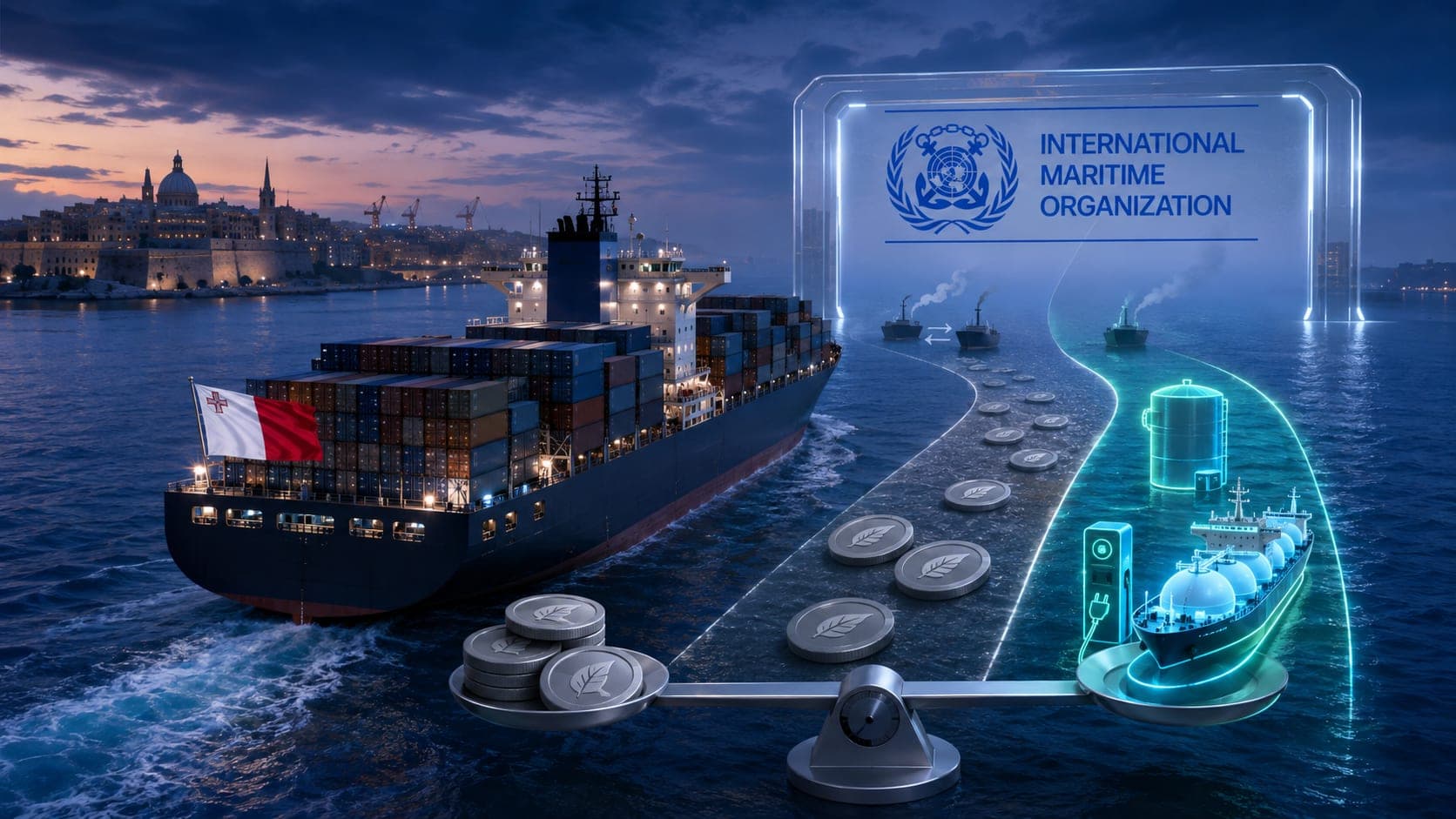
Malta's shipping industry faces critical IMO decision on climate framework. Proposals from Liberia, Brazil and Tuvalu could reshape costs for Maltese-flagged vessels.
Malta’s shipping register, one of the world’s largest, is watching closely as IMO member states prepare to decide next month whether to adopt the Net-Zero Framework approved in draft form in April 2025.
The framework combines a greenhouse gas pricing mechanism with a Net-Zero Fund. Ships that beat emission targets earn credits. Those that fall short must buy credits or pay remedial charges. The system is designed to create a growing financial incentive to switch to cleaner fuels and technology.
But momentum has stalled. Instead of moving toward adoption, countries are debating whether to amend the framework or replace it entirely. For Malta’s maritime sector, the outcome will directly affect operating costs and the competitiveness of the Maltese flag.
That proposal would remove mandatory payments into the Net-Zero Fund and rely more on trading surplus units between ships. Rios warns that if buying credits becomes cheaper than upgrading ships, investment in zero-emission fuels would weaken.
Brazil’s proposal keeps the NZF architecture but delays early reduction targets in exchange for steeper cuts later. Rios argues this would postpone critical investment in clean technology and reduce early revenues to the fund, making the transition harder and more expensive overall.
At the other end of the spectrum, Tuvalu has proposed charging all emissions above zero. Rios estimates this could raise more than $100 billion per year during the 2030s, compared with around $12 billion under the current NZF. That scale of funding would support a just transition, but the proposal faces political pushback from the US and petrostates.
Japan’s alternative, which would let shipowners direct compliance payments to their own projects, was submitted after the deadline and cannot be voted on this year.
Australia, Canada, South Africa and the United Kingdom are pushing to preserve the NZF as agreed, arguing the climate crisis demands implementation, not renegotiation.
Rios acknowledges the framework is not perfect. “It is unlikely to deliver every emission reduction needed to meet IMO’s climate goals, and it will need to – and can – be strengthened over time,” she wrote. But she warned that weakening the pricing mechanism or the fund would make the transition more uncertain and less equitable.
For Malta, the choice matters. A weaker framework could reduce immediate compliance costs for Maltese-flagged ships but would also weaken the investment signal for cleaner fuels, potentially leaving the fleet exposed to tighter rules later. A stronger framework, like Tuvalu’s, would raise costs early but generate the funds needed to help smaller flag states transition.
“The people and the planet cannot afford another year of delay,” Rios said.
With the IMO set to decide in the coming weeks, Malta’s maritime industry is watching which way the wind blows.