
Playtika retains guidance as Q2 revenue climbs but user base shrinks
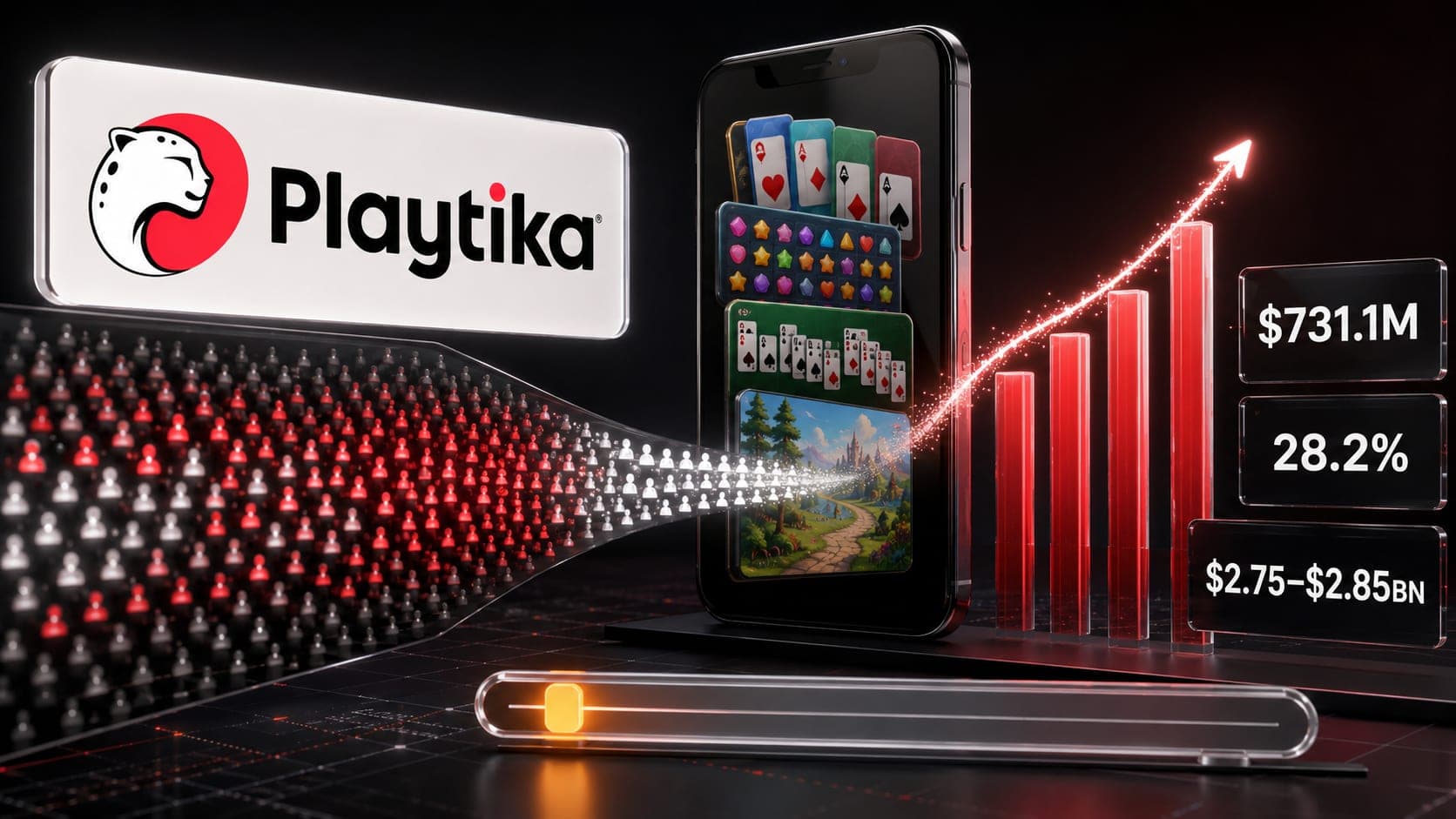
Mobile games group Playtika reported higher Q2 revenue and profit but points to lower-end of full-year guidance amid cautious consumer outlook.
Playtika has retained its full-year guidance but signalled that both revenue and adjusted earnings may land near the lower end of their ranges. The mobile games group reported higher second-quarter figures today, but the numbers reveal a widening gap between audience size and player spending.
Revenue reached $731.1 million, up 5% from a year earlier, though it slipped 1.8% sequentially. Net income rose to $48 million from $33.2 million, while adjusted EBITDA climbed 23.4% year on year to $206.1 million, producing a 28.2% margin.
CEO Robert Antokol attributed the performance to the company's long-term approach. "Our second quarter results demonstrate what has always been at the heart of Playtika, we build games that keep players engaged for years, not quarters," he said. "These results reflect the durability of our model and the discipline of our execution."
That discipline showed in a sharp reduction in marketing spend. Sales and marketing costs fell to $252.6 million from $360.6 million in the first quarter. The margin recovery also benefited from SuperPlay turning into a positive adjusted EBITDA contributor, strengthening the economics of Playtika's largest recent acquisition.
Direct-to-consumer revenue reached $286.9 million, representing about 39% of group revenue. That figure rose 63.1% from last year, though it dipped 1.7% sequentially. Playtika's direct platforms carry payment costs of roughly 3% to 4%, far lower than third-party platform fees. This D2C strategy, is a key lever for margin improvement.
The user metrics, however, tell a different story. Average daily paying users fell 2.9% annually to 367,000. Average daily active users declined 9.1% to 8 million, and monthly active users dropped 17.3% to 24.8 million. Yet payer conversion improved to 4.6% from 4.3%, and average revenue per daily active user rose to $1.01 from $0.87.
Playtika is generating more revenue from a smaller, more engaged audience.
Disney Solitaire remained the growth engine, with revenue surging 288.6% annually to $142.4 million and increasing 15.5% from the first quarter. Bingo Blitz moved in the opposite direction, falling 9.5% to $145.1 million. June's Journey rose 8.1% to $74.7 million.
Cash and short-term investments stood at $438.5 million. Playtika paid a $461 million SuperPlay earnout in April after the acquired studio outperformed its original plan.
The company reaffirmed revenue guidance of $2.75 billion to $2.85 billion and adjusted EBITDA guidance of $750 million to $790 million. But management now expects results near the lower end, citing a more cautious consumer spending outlook and planned reductions in second-half marketing.
First-half revenue totalled $1.48 billion. Reaching the bottom of guidance requires about $1.27 billion during the final six months, or roughly $637 million per quarter. The comparable adjusted EBITDA requirement is about $419 million, slightly above the second quarter's run rate.
The second-half trajectory now depends on two opposing forces. Reduced marketing lowers costs, while fewer active users narrow the available conversion base. Direct sales and Disney Solitaire will carry more of the performance burden.
For Malta's iGaming community, Playtika's results underscore the importance of D2C channels and efficient user monetisation. The ability to grow revenue from a shrinking player base, while tightening marketing spend, offers a model for operators facing rising customer acquisition costs. The cautious outlook also reflects broader consumer trends that may affect the sector in the second half of 2026.