
Michelin turns up the heat on sustainability in Malta's restaurants
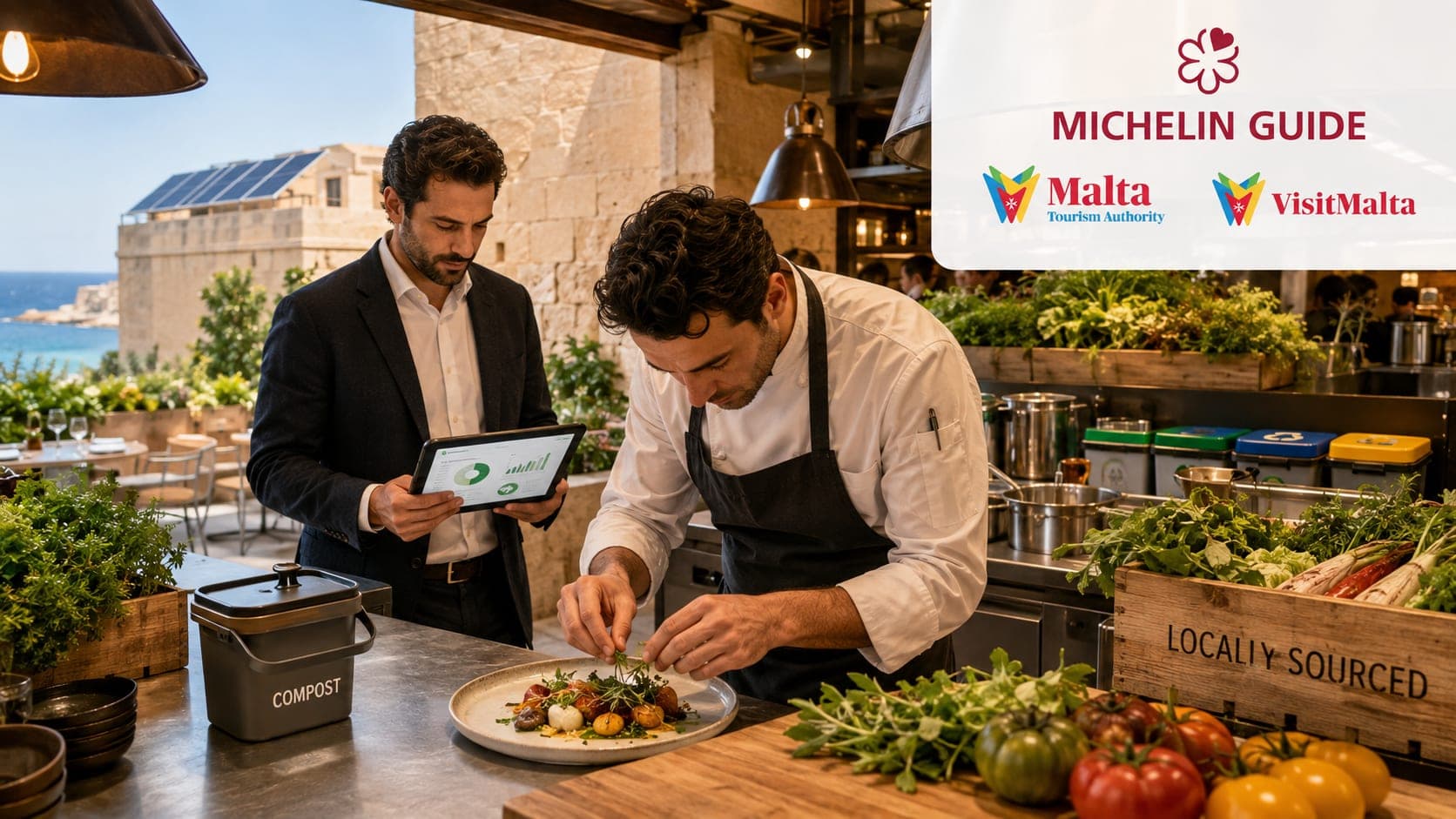
Michelin's sustainability focus pressures Malta's fine dining sector to adapt or risk losing recognition.
Michelin has turned its attention to sustainability in Malta's restaurant scene, and the signal to the local hospitality industry is unmistakable. The guide's editorial feature on sustainable restaurants in the islands marks a shift in how one of the world's most influential dining authorities evaluates excellence.
For decades, Michelin stars were the sole currency of culinary prestige. Now, the guide is weaving environmental practices into its narrative, and Malta's top tables are taking notice.
The feature, published on Michelin's official site, profiles restaurants that go beyond the plate. It highlights sourcing, waste reduction, and energy efficiency as markers of quality, not just ethics.
This is not a separate sustainability badge or a new star category. It is a editorial choice that tells the market where Michelin's attention is heading. For Maltese restaurateurs, ignoring it carries reputational risk.
Malta's fine dining sector has grown rapidly in recent years, with several restaurants earning Michelin stars and a growing number appearing in the guide. The island's compact size and reliance on imported ingredients make sustainability a particular challenge.
Local sourcing is limited by scale, and waste management is costly. Restaurants that invest in solar energy, composting, or partnerships with local producers are making a bet that these factors will matter more in the future.
The Michelin feature suggests that bet is already paying off. Being named in such a context raises a restaurant's profile among international diners who increasingly factor sustainability into their choices.
For the Malta Tourism Authority and VisitMalta, the timing is useful. The islands are marketing themselves as a quality destination, and Michelin's sustainability lens aligns with that positioning.
But the pressure is real. Restaurants that cannot demonstrate credible environmental practices may find themselves overlooked in future editorial coverage, even if their cooking remains world-class.
The cost of going green is not trivial. Solar panels, local supply chains, and waste treatment systems require capital. Smaller establishments may struggle to compete.
Yet the alternative is starker. As Michelin and other global arbiters of taste recalibrate what excellence means, doing nothing is a choice too.
Malta's hospitality sector has shown it can adapt quickly when the market demands it. The question now is whether the industry will treat sustainability as a marketing add-on or a core investment.
The Michelin guide has made its editorial position clear. The rest is up to the chefs and owners.