
Michelin Guide Shines Light on Valletta's Tourism Assets: History, Art and Fine Dining
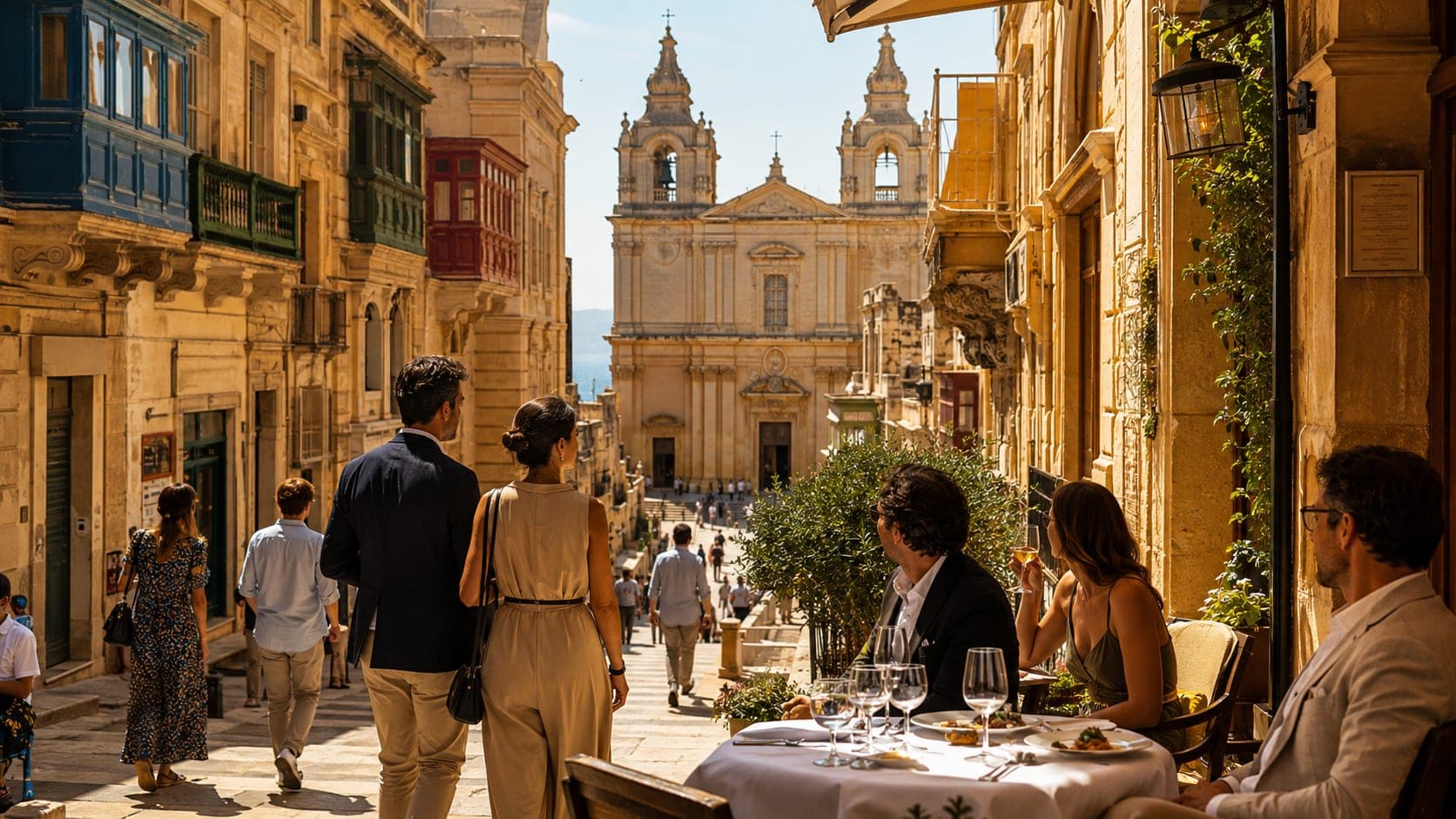
The Michelin Guide profiles Valletta's UNESCO heritage, Caravaggio masterpiece and Michelin-starred restaurants, reinforcing the capital's high-value tourism appeal.
The Michelin Guide has turned its spotlight on Valletta, offering international travellers a curated look at the capital's historic landmarks, art treasures and dining scene. The feature underscores Valletta's position as a compact but culturally dense destination.
Valletta measures just 600 metres across and one kilometre long, with a population of 6,000. It holds UNESCO World Heritage status and contains more than 300 official monuments. The city's streets follow a regular criss-cross pattern, making it easy to explore on foot.
The guide traces Valletta's origins to the Knights of St. John, who arrived in Malta in 1530 and settled in Vittoriosa. After winning a siege in 1565, Grand Master Jean de Valette ordered the construction of a fortified city, which took his name.
At the heart of the city is St. John's Co-Cathedral, described by the Michelin Guide as the number one attraction in the Maltese islands. Its baroque interior dates from the 17th century and features 400 marble tombstones inlaid in the floor. The oratory holds Caravaggio's 'The Beheading of John the Baptist', the artist's only signed masterpiece, alongside his 'Saint Jerome'.
Three restaurants in the cathedral district have earned Michelin recognition. Under Grain holds a Michelin star, Grain Street has a Bib Gourmand for its casual Mediterranean dishes, and Kaiseki serves Asian-inspired fare. All three are located near the corner of Merchant Street and St. Christopher's Street.
The Grand Master's Palace, built in 1571 by the same architect as the co-cathedral, served as the knights' residence until Napoleon expelled them in the late 18th century. Today it houses a collection of 5,700 weapons from the 16th and 17th centuries.
For Malta's tourism industry, the Michelin Guide feature reinforces Valletta's status as a destination that combines heritage with high-end hospitality. The capital's small size and density of attractions make it a strong draw for short-break visitors and cultural tourists, a segment that typically spends more per capita.