
MIA’s €12.5 Million Airfield Electrification Aims to Cut 1,000 Tonnes of CO2
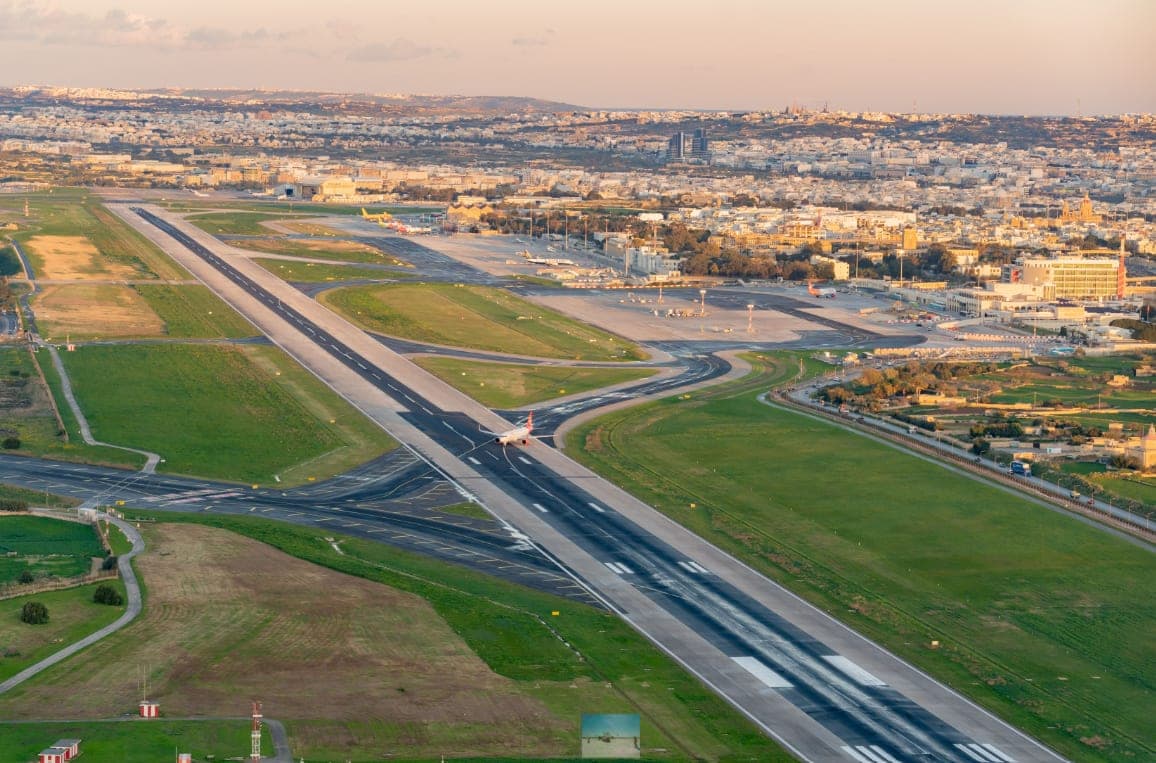
Malta International Airport is investing €12.5 million to electrify its airfield, with an EU grant covering €5.4 million, targeting a 1,000-tonne annual CO2 reduction by 2028.
Malta International Airport has committed €12.5 million to a new Airfield Electrification Programme that will avoid the release of 1,000 tonnes of carbon dioxide every year.
The project is expected to be completed by 2028, well ahead of the deadline set by the European Union’s Alternative Fuels Infrastructure Regulation for airports on the Trans-European Network.
A €5.4 million grant from the EU’s Alternative Fuels Infrastructure Facility is co-financing the investment. The facility sits under the Connecting Europe Fund, which backs transport decarbonisation across the bloc.
The core of the programme involves installing 35 hatch-pit systems that will supply parked aircraft with direct electricity during ground operations. That will end the use of diesel-powered Ground Power Units, cutting emissions significantly.
Where hatch-pit installation is not technically possible, mobile battery GPUs will be deployed, supported by 20 charging points. The investment also includes 15 electric bus charging points to help ground handlers switch to cleaner vehicles.
Behind the visible infrastructure is a major upgrade to the airport’s electrical backbone. Five medium-voltage substations, two generators, and a network with a peak capacity of 7.5 MVA are being built. Integration with the national grid, backed by the island’s electricity provider, will ensure stable supply.
Justine Baldacchino, Head of Sustainability and Analytics at MIA, said the investment forms part of a broader roadmap for low-emission technologies and solar power expansion. “By embarking on our most ambitious project yet, we are reaffirming our commitment to address Scope 3 emissions, while contributing to Malta’s climate targets and the wider European airport industry’s journey towards decarbonisation,” she said.
For Malta’s business community, the project signals that the airport is making a long-term operational bet on electrification. That could reduce airline ground handling costs over time and help the tourism sector meet tightening environmental standards.
The EU grant also lowers the financial risk of the investment, covering nearly half the capital outlay. MIA is betting that early compliance with AFIR will give it a competitive edge as European regulators push for stricter emissions rules.