
Marsaxlokk's last firilla restored as tourism draw
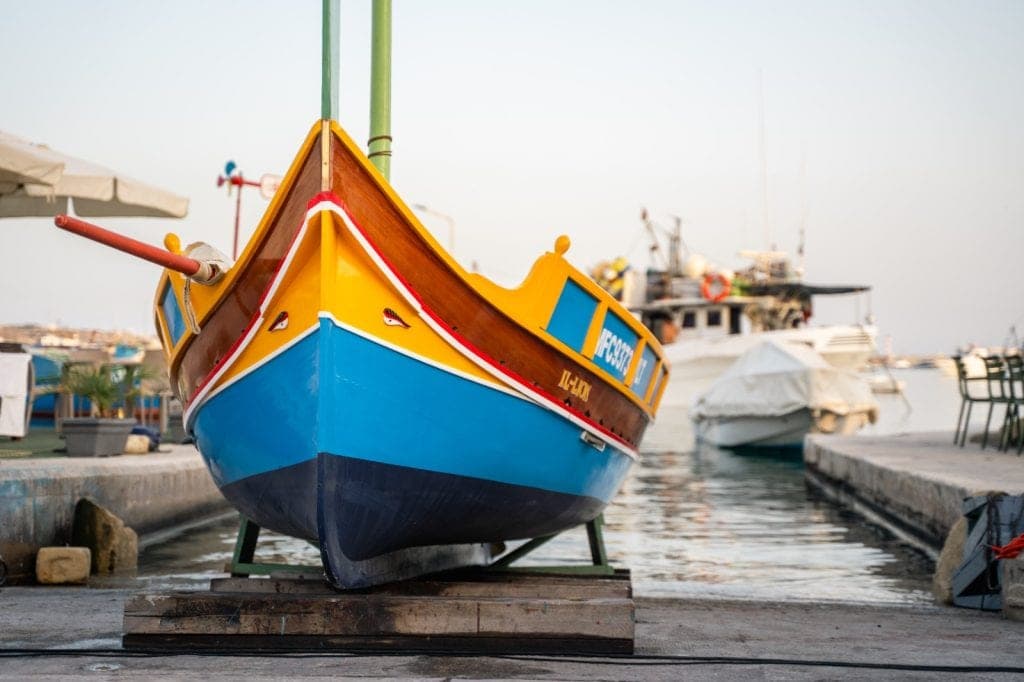
A 100-year-old traditional fishing boat, one of Malta's last surviving firilli, has been restored to sailing condition in a project that aims to boost Marsaxlokk's tourism appeal.
Marsaxlokk's picturesque quay will soon feature a living piece of maritime history. One of Malta's last surviving firilla boats, the century-old 'Lion', has been fully restored to its original sailing condition after a two-year collaboration between Marsaxlokk Heritage, Heritage Malta, and the Malta Tourism Authority.
The project, which began in 2021 as a community-driven effort to save a rapidly deteriorating vessel, evolved into a national initiative to safeguard Malta's vanishing traditional boatbuilding craft. The firilla, historically used as a sailed or rowed fishing boat, represents a typology that is becoming increasingly rare due to the high costs and skills required for maintenance.
Restoration works at the Kalkara Boatyard were carried out by the Delceppo brothers starting in February 2024. Original characteristics were carefully conserved wherever possible, while deteriorated sections were reconstructed using traditional techniques and materials. The most significant achievement was the recreation of the traditional tarkija rigging, a sprit-sail feature that disappeared from Maltese waters in the 1950s.
For Marsaxlokk, a village that draws thousands of visitors weekly for its Sunday fish market and colourful luzzu boats, the restored firilla adds a new layer of authenticity. During winter months, the boat will be exhibited on land along the Marsaxlokk quay, enriching the village's character. During summer, it will sail again, offering a tangible link to Malta's seafaring past.
Minister for Tourism Jo Etienne Abela framed the project squarely within tourism strategy. "The restoration of the firilla is a clear example of how tourism can serve as a positive force in safeguarding our identity and cultural heritage," he said. "By investing in Malta's maritime heritage, we are creating authentic experiences that strengthen our tourism offering while preserving what makes Malta truly unique."
MTA CEO Carlo Micallef echoed that sentiment, noting that sustainable tourism is about more than just attracting visitors. "It is also about investing in the traditions, craftsmanship, and communities that give Malta its authentic identity," he said. The authority's backing signals a recognition that heritage assets can drive tourism differentiation in an increasingly crowded Mediterranean market.
Minister for Arts, Culture and National Heritage Malcolm Paul Agius Galea emphasised the broader cultural significance. "Every traditional vessel we preserve is more than a relic of our past – it is a living testament to the craftsmanship, skill and way of life that have shaped the Maltese people throughout the centuries," he said.
Heritage Malta CEO Noel Zammit pointed to the agency's broader maritime investments, including the extensive regeneration underway at the Malta Maritime Museum in Birgu and the long-standing Underwater Cultural Heritage Unit. "The sea has shaped who we are today," Zammit said, "as our forefathers knew how to use it as a bridge rather than a barrier."
The project also engaged the local community through painting workshops open to students, fishermen, families, and residents. This public participation element ensures that the knowledge and appreciation of traditional boatbuilding extends beyond the restoration itself.
For Malta's tourism sector, which is increasingly focused on quality and sustainability over volume, the firilla restoration offers a model. It demonstrates how investment in cultural heritage can create distinctive visitor experiences while supporting local communities and preserving endangered crafts. Marsaxlokk's identity as Malta's most iconic fishing village has just been strengthened.