
Malta's legal gaps on deepfakes exposed as Chamber calls for urgent reform
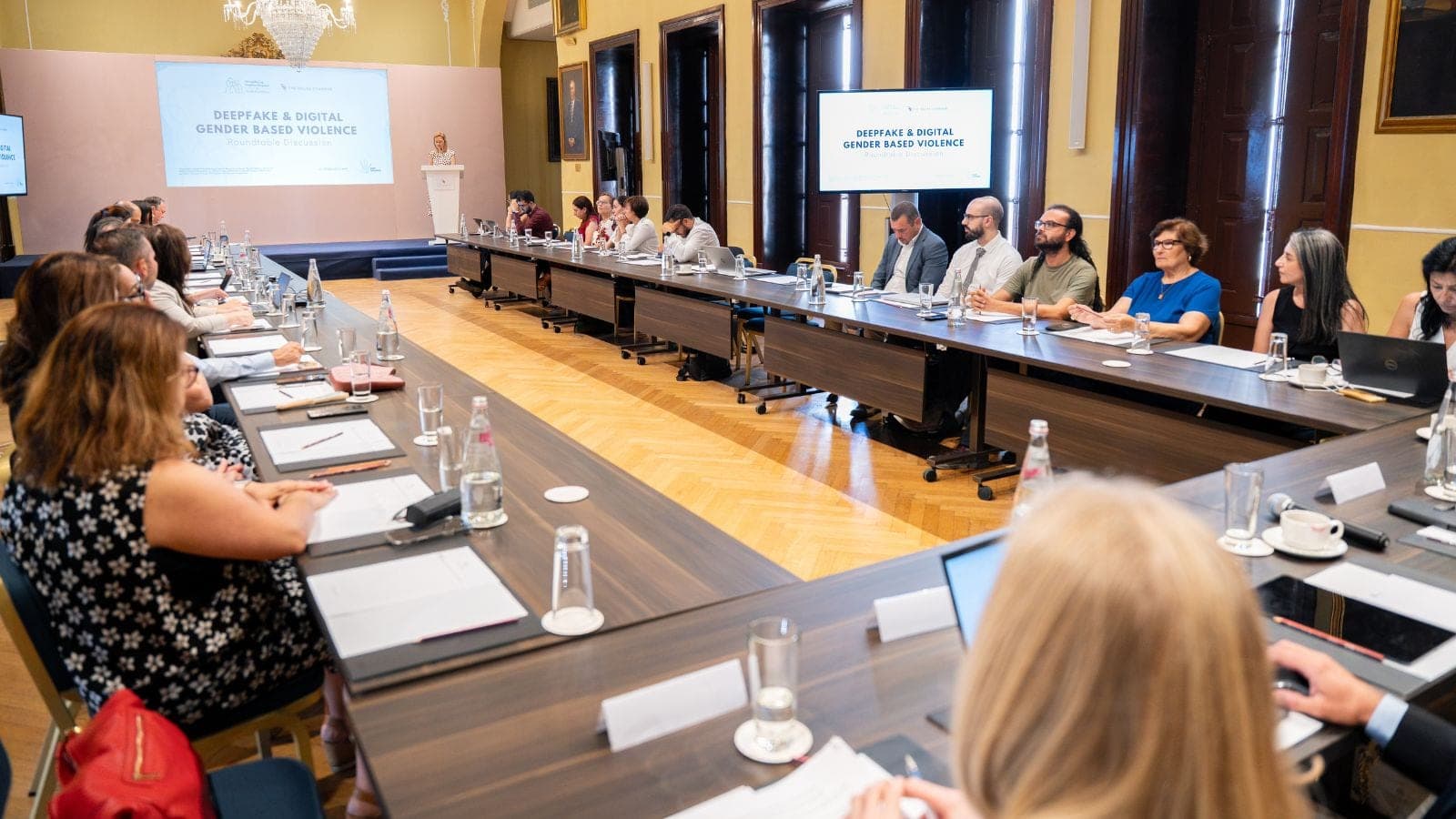
The Malta Chamber warns current laws don't cover deepfake sexual content, urging swift transposition of EU Directive 2025/1385.
Malta is running out of time to update its laws against deepfake sexual content, with the Malta Chamber of Commerce warning that current legislation leaves victims unprotected and the country out of step with EU requirements.
A roundtable organised by the Chamber brought together business leaders, government officials, civil society, and technical experts to confront a growing threat. Generative AI now allows virtually anyone to produce convincing fake images, audio, and video, and non-consensual intimate deepfakes are on the rise.
The legal response has not kept pace. Dr Antonio Ghio, Partner at Fenech & Fenech Advocates, told the roundtable that while Maltese law criminalises the dissemination of sexual content without consent, it does not yet adequately address the creation and dissemination of sexually generated deepfakes and the harm they cause.
Other countries have already amended their criminal laws to recognise these offences, Ghio said. Malta urgently needs to follow suit, particularly through the proper transposition of EU Directive 2025/1385 on combating violence against women and domestic violence. Ghio cautioned against rushing at the expense of well-designed law but stressed the need for speed.
Rachel Bondi Attard, Head of Media and Communication Strategist, framed the challenge in stark terms. Technology is a continuation of centuries-old social attitudes in which women's bodies, images, and reputations have been treated as objects for public consumption, control, and judgement. Artificial intelligence did not invent the exploitation of women: it automated it.
Disinformation Analyst Naja Bentzen highlighted that women face growing online pressures from geopolitical and ideological backlashes accelerated by generative AI-facilitated gendered disinformation. She argued this is not inevitable and can be tackled with well-balanced tech regulation, strengthened enforcement, and a whole-of-society approach.
Judge Lorraine Schembri Orland, Maltese Judge at the European Court of Human Rights, provided the legal backdrop. She referenced ECtHR cases including Opuz v. Turkey, Valiulienė v. Lithuania, Talpis v.
Italy, and Volodina v. Russia, which establish the State's positive obligation to protect individuals from harm, including emerging digital threats.
Dr Sophia Nightingale, Senior Lecturer in Psychology at Lancaster University, described how the sophistication and accessibility of generative AI now allow almost anyone to create convincing fake content. The impacts on those targeted can be devastating through the ongoing psychological, emotional, and physical harms caused.
The Chamber's initiative was funded by the Commission on Gender-Based Violence and Domestic Violence through the 'Together We Empower-A Future without Violence' programme. The roundtable aims to establish a structured platform for dialogue and promote coordinated sectoral responses.
For Malta's business community, the regulatory gap represents both a compliance risk and a reputational exposure. Companies operating in jurisdictions with strong digital protections may face pressure to match those standards locally, and the absence of clear rules creates legal uncertainty for employers and platforms alike.