
Malta Airport locks €100m in debt financing to fund €345m expansion
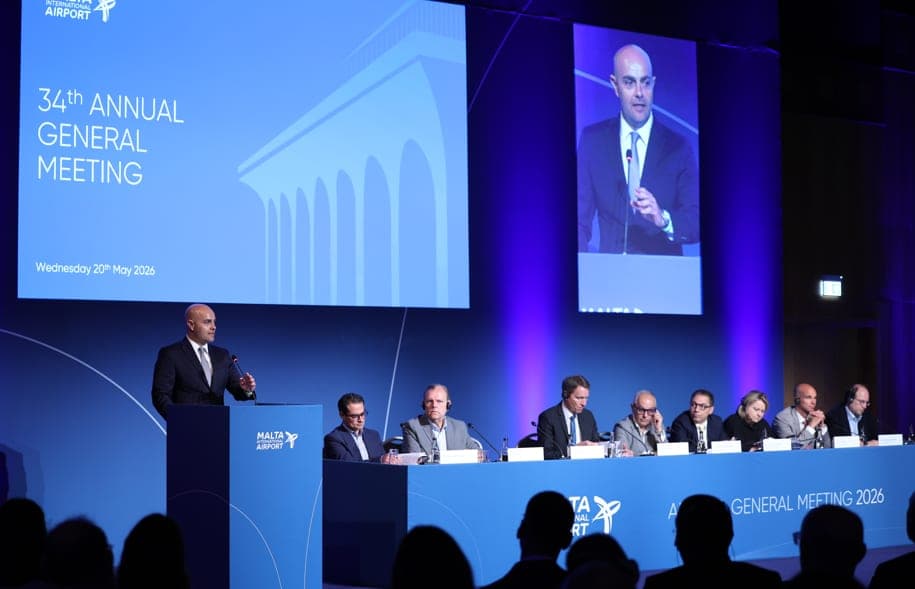
Malta International Airport secures €100 million in loans to fund its largest expansion since privatisation, including the East Expansion and SkyParks 2 project.
Malta International Airport has locked in €100 million in external financing, giving it the firepower to push ahead with the biggest upgrade to the terminal since privatisation. Chief Executive Alan Borg disclosed the deal at the company’s 34th annual general meeting.
The financing is split evenly into two loans: €50 million for five years and €50 million for seven years.
Borg said the backing of a leading local bank reflected “shared confidence in our vision for Malta International Airport and its role in the future of the tourism industry.” He added that beyond funding projects, the structure allows the company to preserve liquidity for ongoing obligations to employees, business partners, and shareholders.
The borrowing sits at the centre of a €345 million investment programme. The centrepiece is the East Expansion project, which adds 26,000 square metres of terminal space by 2028. That includes 32 new check-in desks, five departure gates, a crew gate, and extra circulation and commercial areas.
Site enabling is already running on schedule. Excavation below road level, the rerouting of critical building services, and safe access routes are all underway.
SkyParks 2 is also advancing. The hotel building within the project is scheduled for handover in shell form by the final quarter of 2026. The four-star hotel will be operated by the Claret Group under Accor’s Tribe brand.
Last year the company spent €61.6 million on capital projects, reinvesting nearly 40 per cent of annual revenue into operational resilience, modernising infrastructure, and passenger experience.
For the local business community, the debt package was a deliberate choice. By tapping bank financing rather than equity or operational cash, the airport keeps its balance sheet flexible while the biggest construction cycle in its history plays out.
That matters because the tourism sector relies on the airport’s capacity. Any delays or cost overruns on the expansion would ripple through airlines, hotels, and ground handlers. The seven-year tranche gives the company a long runway to absorb those risks before repayment pressure builds.