
Jonathan Dingli takes helm at MIA, pledges sharper focus on competitiveness and digitalisation
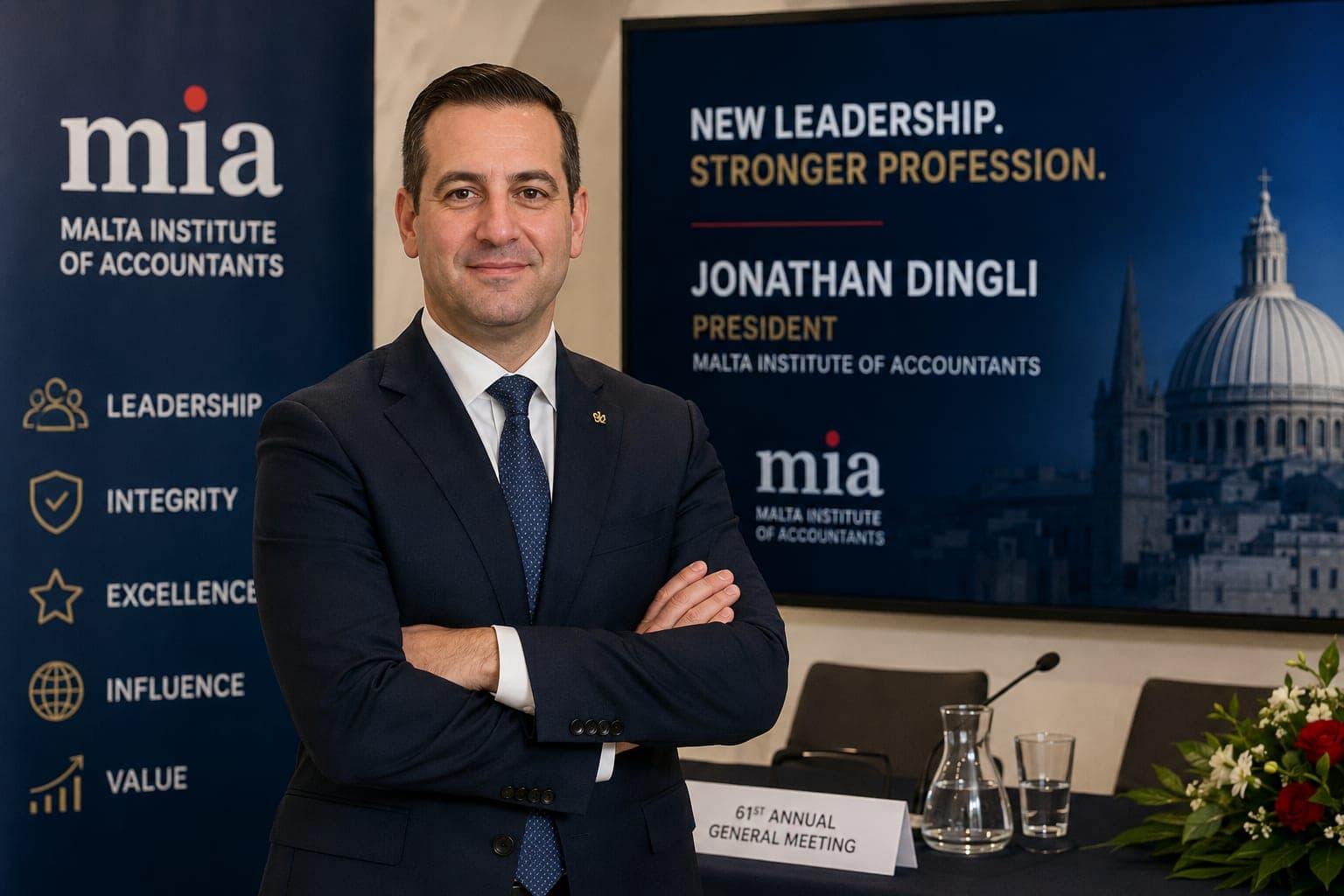
Jonathan Dingli elected president of Malta Institute of Accountants, vowing to strengthen the institute's influence as a driving force in Malta's economic development.
Jonathan Dingli has been elected president of the Malta Institute of Accountants, taking the helm as the profession confronts regulatory tightening and digital disruption.
The election took place at the institute's 61st annual general meeting on 25 September at Villa Arrigo. Seven council members were voted in, with Edmond Brincat, Mark Bugeja, Thomas Galea, Paul Giglio, Ronald Mizzi and Lucienne Pace Ross returning to their seats. Karen Spiteri Bailey joined the council for the first time.
The council also elected Annabelle Zammit Pace as vice-president, Paul Giglio as secretary and Shawn Falzon as treasurer.
Outgoing president Mark Bugeja, who served a two-year term, outlined five priorities that guided his tenure: sustainability, taxation, anti-money laundering, digitalisation, and talent development and retention. He described these as central to Malta's resilience and reputation. Bugeja also pointed to the institute's expanding international role, contributing to EU and OECD reforms while ensuring local realities are considered.
CEO Maria Cauchi Delia reported that the institute has submitted a comprehensive set of proposals for the 2026 Budget to both the government and the opposition. The MIA is also running a series of events, including conferences for small and medium practitioners, accountants in business, tax professionals, and Meet the Regulator sessions with key financial regulators.
Dingli, who served as institute secretary for the past two years, thanked the outgoing president and pledged to strengthen the MIA's influence. He said the council would position the institute as a central stakeholder and driving force in advancing Malta's development into a more competitive, digital and sustainable economy.
The leadership change comes as Malta's financial services sector faces heightened EU scrutiny and rapid technological shifts. How the MIA shapes its input on tax, AML and corporate governance reforms will matter for businesses that rely on the institute's advocacy.