
Hidden Goddesses: Unseen Preca paintings breathe new life into Malta’s heritage offering
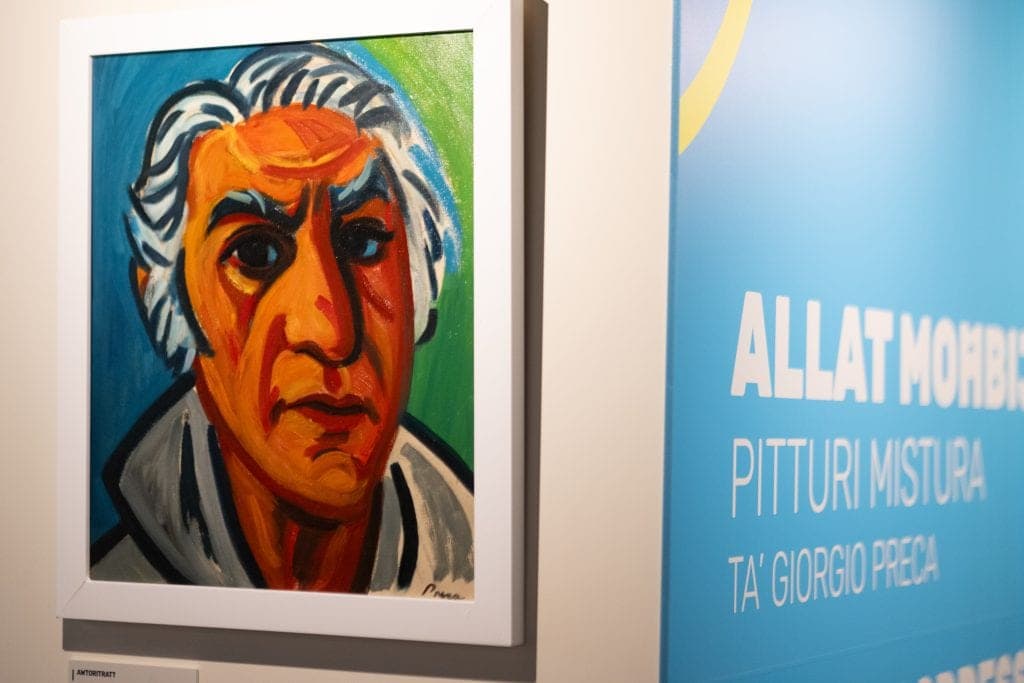
Thirty-one never-before-seen Preca works go on display at the National Museum of Archaeology, linking modern art with prehistoric artefacts.
Heritage Malta is betting on a fresh cultural draw. Thirty-one unseen paintings by Giorgio Preca, inspired by the Sleeping Lady, are now on public display for the first time at the Gran Salon of the National Museum of Archaeology in Valletta.
The exhibition, titled ‘Hidden Goddesses – Unseen paintings by Giorgio Preca’, runs until 4th October 2026. Admission is included in the museum experience, a pricing move designed to boost footfall without creating a separate ticket barrier.
The collection includes a self-portrait and works inspired by the prehistoric clay statuette from the Ħal Saflieni Hypogeum. Preca reinterpreted the figure with dark lines, bright colours, and simplified forms, creating a direct dialogue between Malta’s Neolithic past and 20th-century modernism.
Preca worked as a restorer in the same building, the Auberge de Provence, before leaving Malta for good in 1956. His family released the works following the success of a MUŻA exhibition five years ago, recognising the commercial and cultural potential of his legacy.
Heritage Malta Chairman and MUŻA Director Mario Cutajar said Preca introduced new artistic trends in Malta and gathered young artists around him even when his work was censored by the Establishment. “The Maltese artist is a thinker driven by a thirst for change,” Cutajar stated.
CEO Noel Zammit framed the exhibition as part of Heritage Malta’s mission to keep sites relevant. “Through these works, visitors are invited to reflect on where we come from and who we are today,” he said.
Minister Malcolm Paul Agius Galea underlined the government’s commitment to investing in cultural accessibility. The exhibition aims to turn heritage into a recurring commercial attraction rather than a static archive.
The layout itself is a design choice with tourism appeal. Paintings are arranged in semicircular spaces around a central passage, evoking the shape of the Mnajdra structure. Prehistoric artefacts, both originals and copies, sit alongside the canvases.
The artist’s family is donating the 1972 painting ‘Sleeping Goddess’ to the national collection. An illustrated catalogue in English is available for purchase at Heritage Malta museums and online.
The museum is open daily from 09:00 to 19:00, with last admission at 18:30. The exhibition space is fully accessible.
For Malta’s heritage sector, this is a calculated play: leverage an unseen archive, connect it to an iconic national symbol, and drive visitors through one of Valletta’s prime cultural venues.