
Haileybury Malta opens €19m Mtarfa campus as MDB-backed historic site conversion
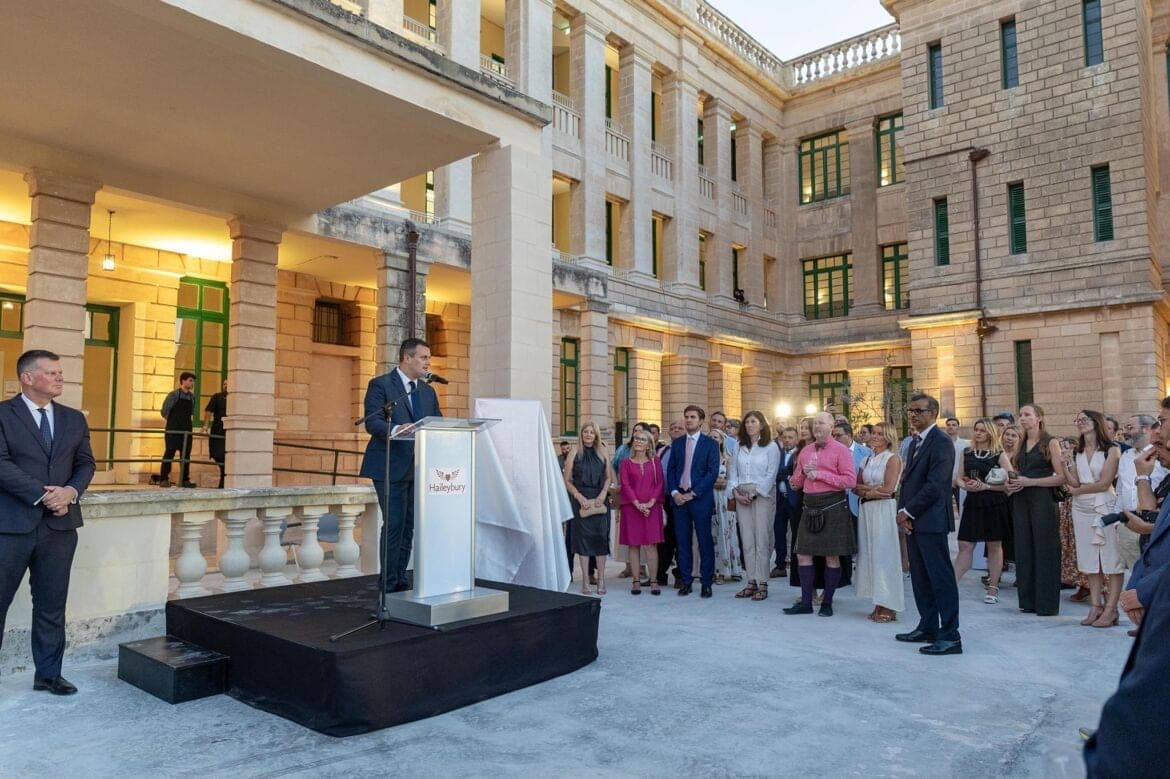
Haileybury Malta's €19 million permanent campus in Mtarfa, a converted naval hospital, opened with €10 million in Malta Development Bank backing.
Haileybury Malta officially inaugurated its permanent campus in Mtarfa on Friday, turning the former Royal Naval Hospital into a modern international school at a cost of roughly €19 million.
The campus was opened by Deputy Prime Minister Ian Borg and Education Minister Byron Camilleri. It marks the school’s move from a temporary site in Ħal Tarxien, where it started with 50 students in 2023.
Now offering nursery through to Sixth Form, the project is partly financed through the Malta Development Bank. The MDB mobilised €10 million under the Guaranteed Co-Lending Scheme, targeting climate action, environmental sustainability, and infrastructure.
Post-rehabilitation, the building is expected to consume 75% less primary energy, according to TVMnews.mt.
Borg, who grew up in the area, said seeing the historic building repurposed while retaining its character gave him great satisfaction. He described the project as a clear example of government creating the conditions and financial structures for responsible investment that creates lasting value.
A place built to care for people, he said, has become a place of learning and development.
Camilleri argued the campus expands choice and quality for Maltese families. He said the true value of education is not measured only by results and qualifications, but by how well students are prepared for life.
Louise Salmond Smith, who heads Haileybury Malta, said the school blended the best of Malta’s and the UK’s education systems to serve local and international families.
The government thanked Haileybury’s UK and Malta management, the board of governors, investors, the MDB, and the Mtarfa community for welcoming the school.
For Malta’s business community, the project demonstrates how the MDB’s guarantee schemes can unlock private investment in large-scale education infrastructure while preserving heritage assets. The energy efficiency target also signals that sustainability is a formal condition of public financing for such conversions.