
Gozo's local food supply chain: How small producers power the island's restaurant scene
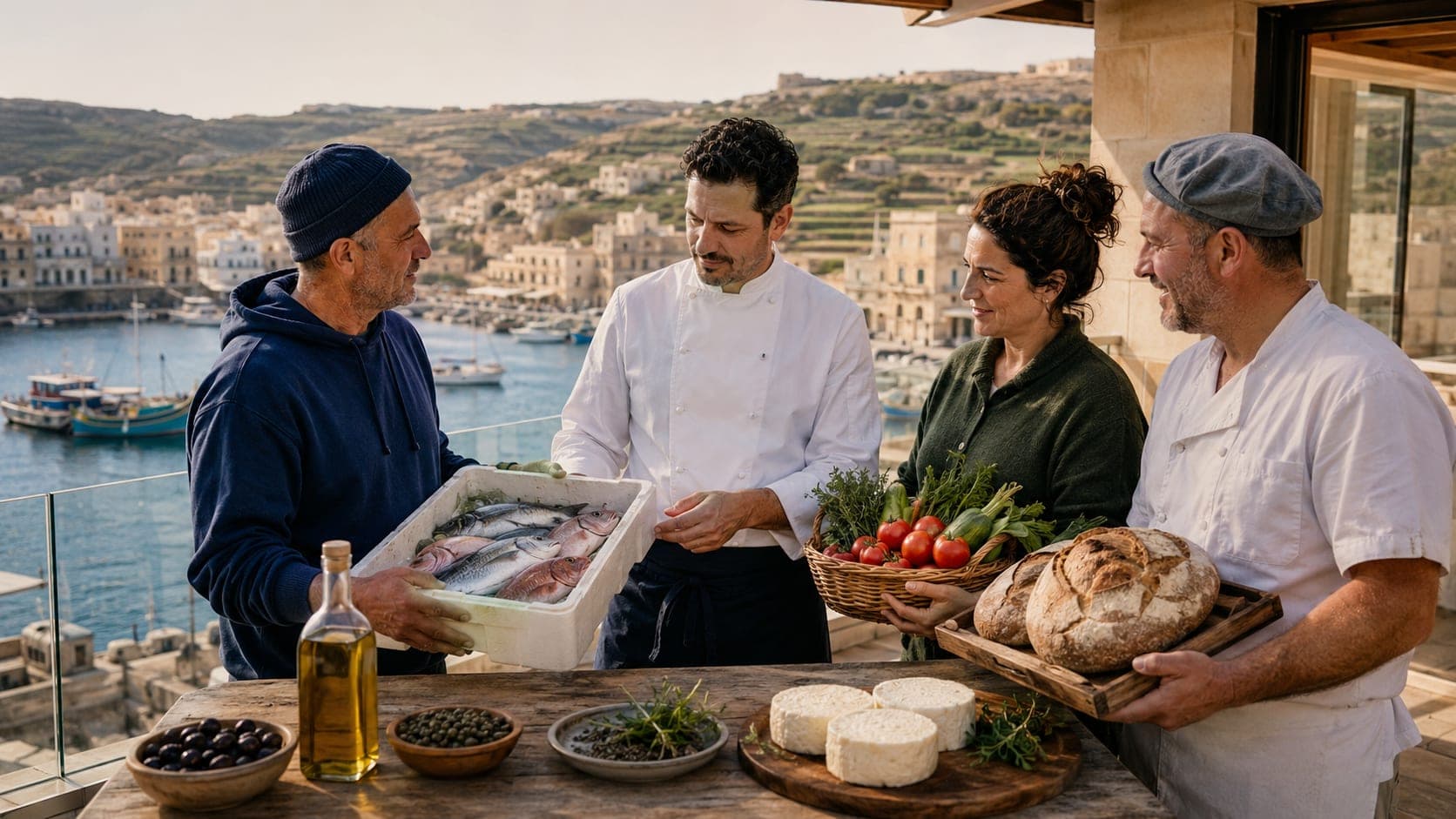
Chef George Attard of Level Nine at The Grand reveals the local producers that keep his kitchen stocked and why Gozo's food ecosystem matters for business.
Chef George Attard runs the kitchen at Level Nine at The Grand in Mġarr, a restaurant perched on a ninth-floor terrace overlooking the harbour. But his cooking depends on a network of small Gozitan producers that stretches from Nadur to Xewkija.
In comments given to the Michelin Guide, Attard outlined the suppliers he relies on for ftira bread, fresh fish, meat, cheese, vegetables, and even craft beer. The list reads like a directory of the island's independent food businesses.
For bread, Attard goes to Mekren and Maxokk bakeries in Nadur, both family operations with wood-fired ovens. Ta' Saminu Bakery in Xewkija has been running for over 60 years and is now run by the third generation of bakers. Portelli Confectionery in Victoria he calls "perhaps the finest pâtisserie on Gozo."
Fish comes from Puxulina Fish Shop in Victoria, run by Samuel Bugeja. Attard noted that Bugeja works directly with about a dozen local fishing boats landing their catch in Marsalforn or Mġarr. "This ensures there is always fresh fish available on Gozo and that we are less dependent on supplies from Malta," Attard said.
For meat, he uses Teddy Butcher and Cini Tal-Mija in Rabat for local pork, and La Boucherie from Malta for beef. Vegetables and fruit come from Daily Fresh at Gozitano Agricultural Village in Xewkija, where Mario sources directly from local farmers.
The same location hosts Lord Chambray brewery, which produces an IPA craft beer, and Gozo Cottage, which sells artisanal products including Gigantija extra virgin olive oil that recently won a gold medal. Attard said he uses that oil in his dishes at Level Nine.
Ta' Rikardu in Victoria's citadel offers local charcuterie, home-made gbejna, capers, olives, and Gozitan country wine. The shop also operates as a restaurant, attracting tourists and locals alike.
Attard also recommended Restaurant Peppina in Xewkija for its contemporary bistro cuisine that makes generous use of local ingredients.
For Gozo's hospitality sector, the existence of this supply chain is a competitive advantage. It allows restaurants like Level Nine to offer a menu rooted in the island's terroir, reducing freight costs and delivery delays from Malta. It also gives tourists a reason to explore the island's food producers directly, spending money at bakeries, delicatessens, and markets that might otherwise rely on local foot traffic alone.
Attard's routine of shopping at multiple locations in a single trip is possible because of Gozo's size. "Travel time from one place to another is negligible," he said. That efficiency benefits both the chef and the small businesses that supply him.
After work, Attard frequents Gleneagles Bar in Mġarr, one of the oldest bars on the island, named after the steamship that once connected Gozo to Malta. He described it as having "the look of an old fisherman's pub" with a warm atmosphere and affordable locally produced drinks.
The bar, along with others like Ix-Xatt at One80 and Ember at Sea, forms part of the same local ecosystem that Attard draws on for his cooking. The network of producers, suppliers, and hospitality venues creates a closed loop that keeps spending within Gozo's economy.
For a small island that depends heavily on tourism, that loop matters. Every euro spent at a local bakery or fish shop can circulate through the economy several times, supporting jobs and family businesses that have operated for generations.
Attard's willingness to name his suppliers publicly also acts as a form of endorsement. For a small producer like Puxulina Fish Shop or Daily Fresh, a mention from a chef at a well-known restaurant can drive significant customer traffic.
Gozo's food ecosystem is not just a culinary story. It is a business model built on proximity, quality, and relationships that larger competitors cannot easily replicate.