
Delta's Malta-New York Route Lands: A Bet on America's High-Spending Traveller
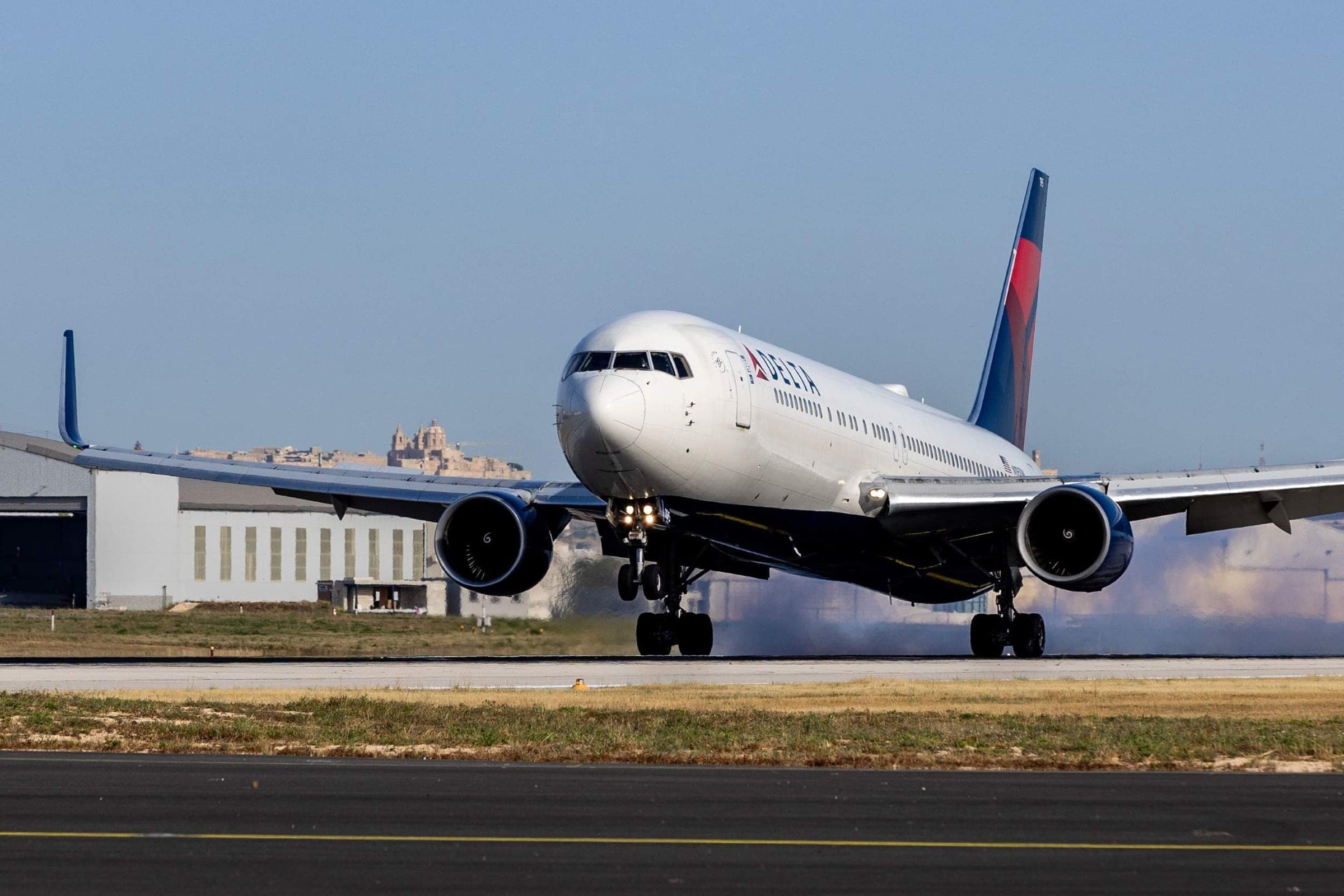
Delta Air Lines touched down in Malta, launching the first US carrier service from JFK. The three-times-weekly route targets America's highest-spending tourists.
Delta Air Lines has landed in Malta, and with it a direct bet on the American traveller. The first US carrier service between New York's John F. Kennedy International Airport and Malta International Airport touched down at 8.12am carrying around 200 passengers, ending years of indirect connections to one of the world's most valuable source markets.
The arrival was marked with a ribbon-cutting ceremony attended by Delta, airport officials and industry stakeholders, while passengers stepped off the plane to locally inspired treats and commemorative keepsakes. The symbolism was deliberate: this is a route that Malta's tourism economy has been chasing for years.
The numbers explain why. American visitors were Malta's highest-spending tourists last year, with arrivals from the United States up 47 per cent on 2023. MIA CEO Alan Borg framed the launch as a response to proven demand rather than a gamble.
"These statistics show that Delta Air Lines is not taking a leap into the unknown but responding to a growing demand for travel to Malta among Americans," Borg said. He added a warning that the service's success now depends on the whole tourism chain.
"It is now crucial that stakeholders across the entire tourism value chain recognise and embrace their responsibility in ensuring that the Malta-New York service is successful," he said.
Delta's General Manager for Sales in Europe, Ilse Janssens, positioned the route as a gateway in both directions. She pointed to Malta's mix of UNESCO-listed cities, archaeological sites, luxury resorts, yachting harbours and culinary scene as the draw for US leisure travellers, while noting that the service gives Maltese passengers access to New York and onward connections across Delta's North American network.
The service operates three times weekly through the summer season until October, departing Malta on Mondays, Thursdays and Saturdays. That schedule is a test of appetite rather than a permanent commitment, and the pressure is on to fill seats.
For Malta's business community, the implications extend beyond tourism. Prime Minister Robert Abela described the route as a direct bridge for visitors, businesses, investors, students and families, and an opportunity to strengthen economic ties with the US while diversifying visitor markets and attracting higher-value tourism.
The real question now is whether the island can deliver an experience that matches the premium price point American travellers are used to paying. Hotels, restaurants, transport providers and attractions will need to raise their game, because a disappointed high-spender is a lost repeat customer.
Delta's entry also changes the competitive dynamic at Malta International Airport. A US carrier with a global network now has skin in the game, which could pressure other airlines to respond with their own transatlantic capacity or risk losing share of a lucrative market.
The summer will reveal whether the demand that justified the route translates into sustainable loads. If it does, Malta's long-held ambition of becoming a serious transatlantic destination will have taken a decisive step forward.